Identify future grid constraints before they require urgent upgrades

Utilities need to plan for where and when new load and generation will affect the distribution system. Static assumptions and a small number of reference networks can miss the local conditions that determine whether an asset, feeder, or network area will become constrained.

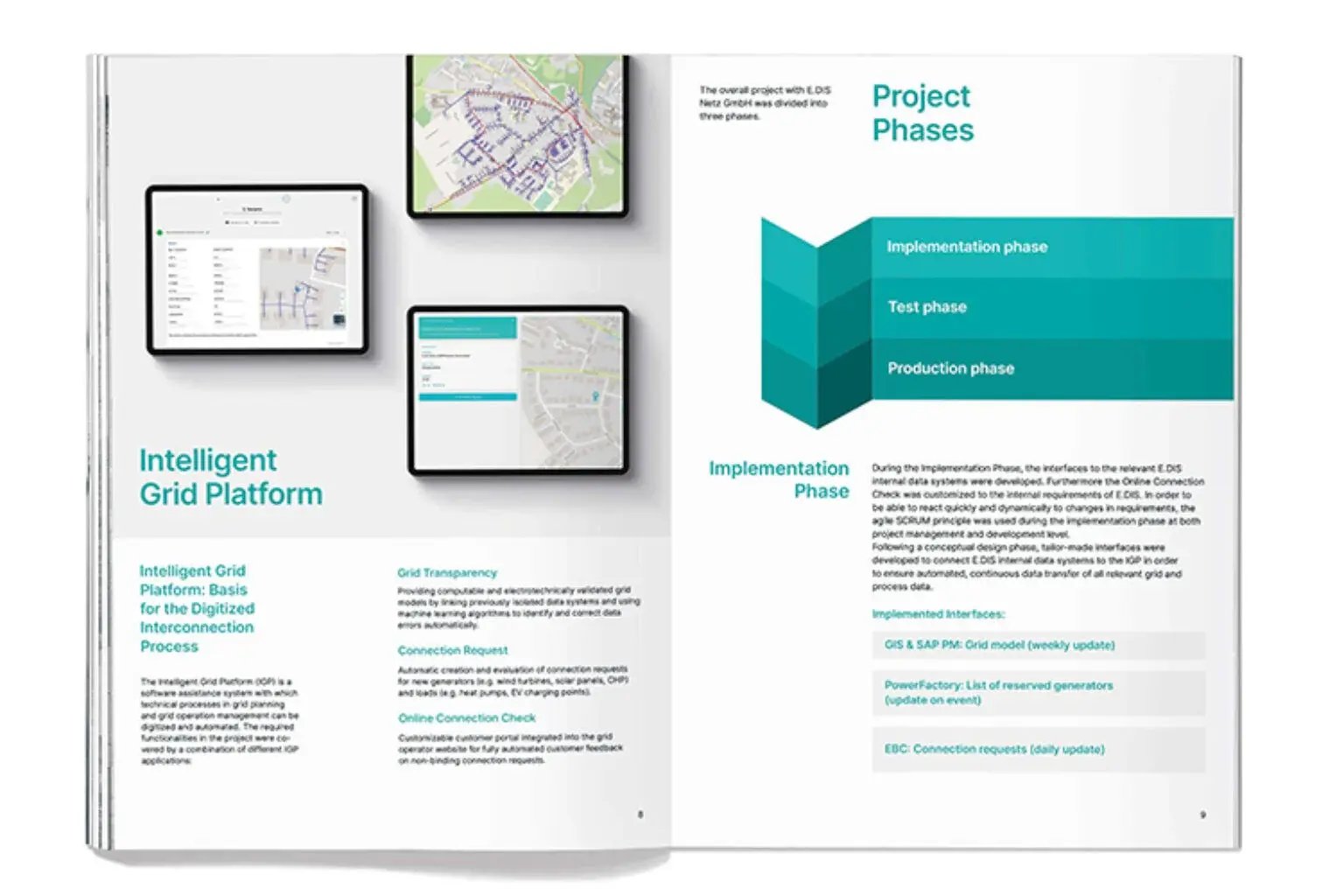
The Intelligent Grid Platform (IGP) helps utilities create and evaluate future grid scenarios against a physics-based network model. Engineers can identify emerging load and voltage constraints, understand the drivers behind them, and build a stronger basis for proactive distribution planning.

Turn planning assumptions into grid-specific scenarios

Future conditions are not uniform across a service territory. Growth in EV charging, heat pumps, distributed generation, storage, and large loads can have very different effects depending on where it occurs and how the network is configured.

The IGP enables utilities to define future scenarios using their own assumptions and data sources. Scenarios can be distributed across the network using relevant attributes or assigned to specific connection points where higher-resolution data is available.

Assess the conditions behind potential constraints

Once a scenario is mapped to the network, the IGP uses load-flow analysis to evaluate the effect on the relevant grid areas. Teams can use representative conditions or time-series analysis to investigate possible voltage-limit violations, overloads, and other constraints.

  • Evaluate future loading and voltage conditions across the relevant network area.
  • Identify assets and areas where future scenarios may create constraints.
  • Review scenario results and key indicators, such as overloaded assets.
  • Compare assumptions and revise scenarios as forecasts or planning inputs change.

Explore further

Case Study

Case study: The Strategies of Readying Helsinki’s Power Grid for 2030 with envelio
Carry constraint insights into planning decisions

Identifying a constraint is the beginning of the planning process. Scenario results can inform the evaluation of reinforcement, network reconfiguration, flexibility, and other measures. They can also be used to develop long-term investment plans across defined planning horizons.

Common questions we hear about our tool for the evaluation of future grid scenarios

What is grid scenario analysis?

Grid scenario analysis evaluates how future changes, such as load growth, electrification, distributed generation, or storage, may affect the distribution network. It helps utilities identify potential constraints and plan the technical response before those conditions occur.

How does grid scenario analysis identify future constraints?

The Intelligent Grid Platform maps scenario assumptions to a validated network model and evaluates the result with physics-based grid calculations. Engineers can review where voltage, loading, or other technical limits may be exceeded under the scenario being assessed.

Can utilities use their own forecasts and planning assumptions?
Yes. Utilities can define scenario inputs using their own forecasts, planning studies, or external data sources. The appropriate level of detail depends on the planning question and the data available.
Why use time-series analysis for distribution planning scenarios?

Time-series analysis helps show whether a constraint is persistent or occurs only under particular operating conditions. This can provide a more useful basis for evaluating reinforcement, flexibility, and other planning options.