Give customers an instant answer before they submit an interconnection request
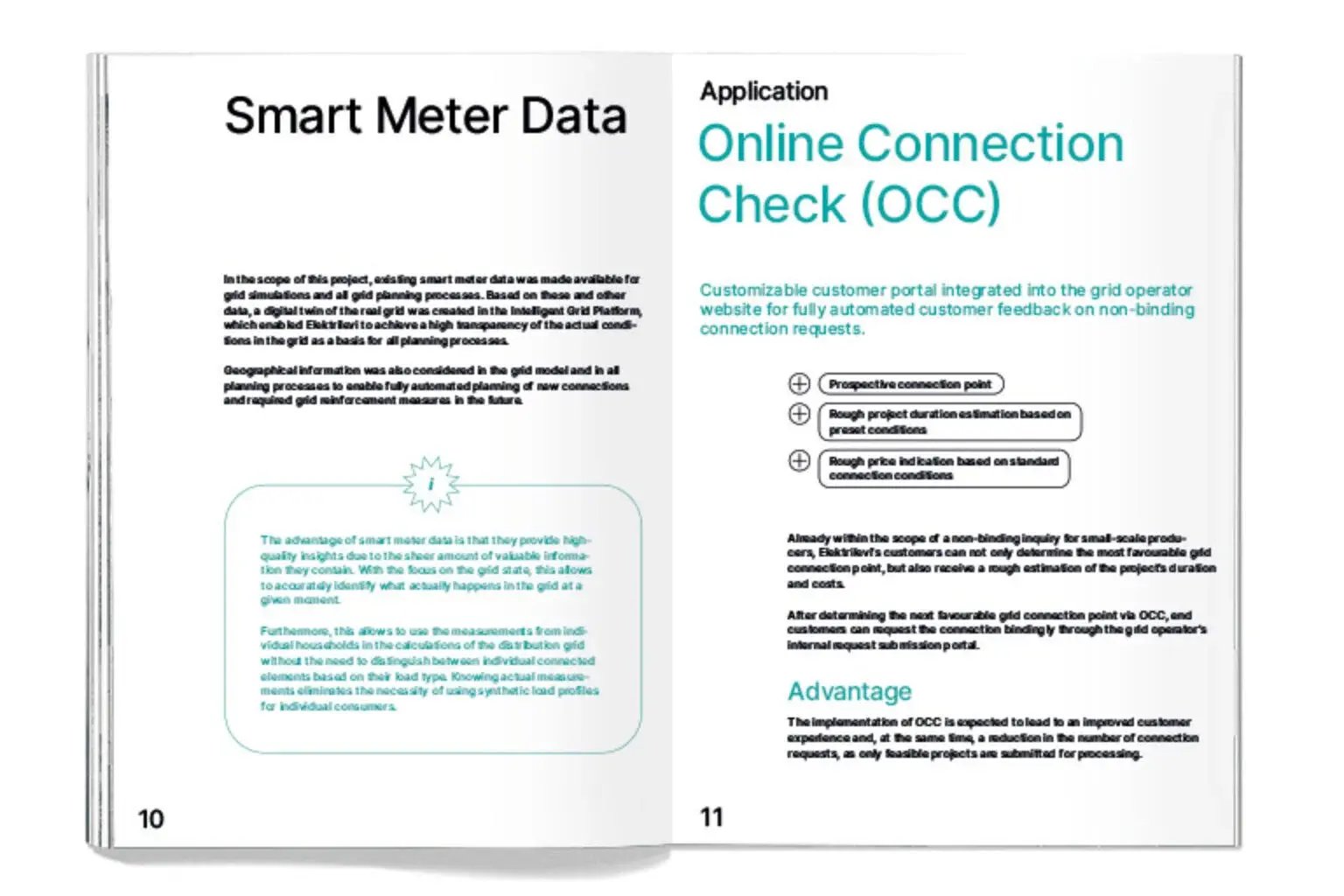
Online Connection Check (OCC) is a customer self-service tool for electric utilities. It helps residential and small-business customers assess whether a solar system, EV charger, heat pump, or other small-scale asset can connect at a specific address.
Powered by the utility’s continuously updated, physics-based grid model, it provides immediate, non-binding feedback on technical feasibility and an initial cost estimate. Customers get a clearer answer to a simple question:
Can I connect this asset at this address?
Improve the interconnection process before an application is submitted
Many small-scale interconnection requests begin with information customers cannot easily find on a utility website. They want to know whether a proposed asset can connect, what the next step is, and whether their project is likely to require further review.
Without a self-service option, those early questions become manual work for utility teams. Online Connection Check (OCC) gives customers a practical way to assess an individual site before submitting a formal interconnection request.
A grid connection check for the exact site and asset
Customers enter an address, select the asset type, and provide the requested capacity. The tool evaluates the proposed grid connection using the utility’s underlying network model and utility-defined criteria.
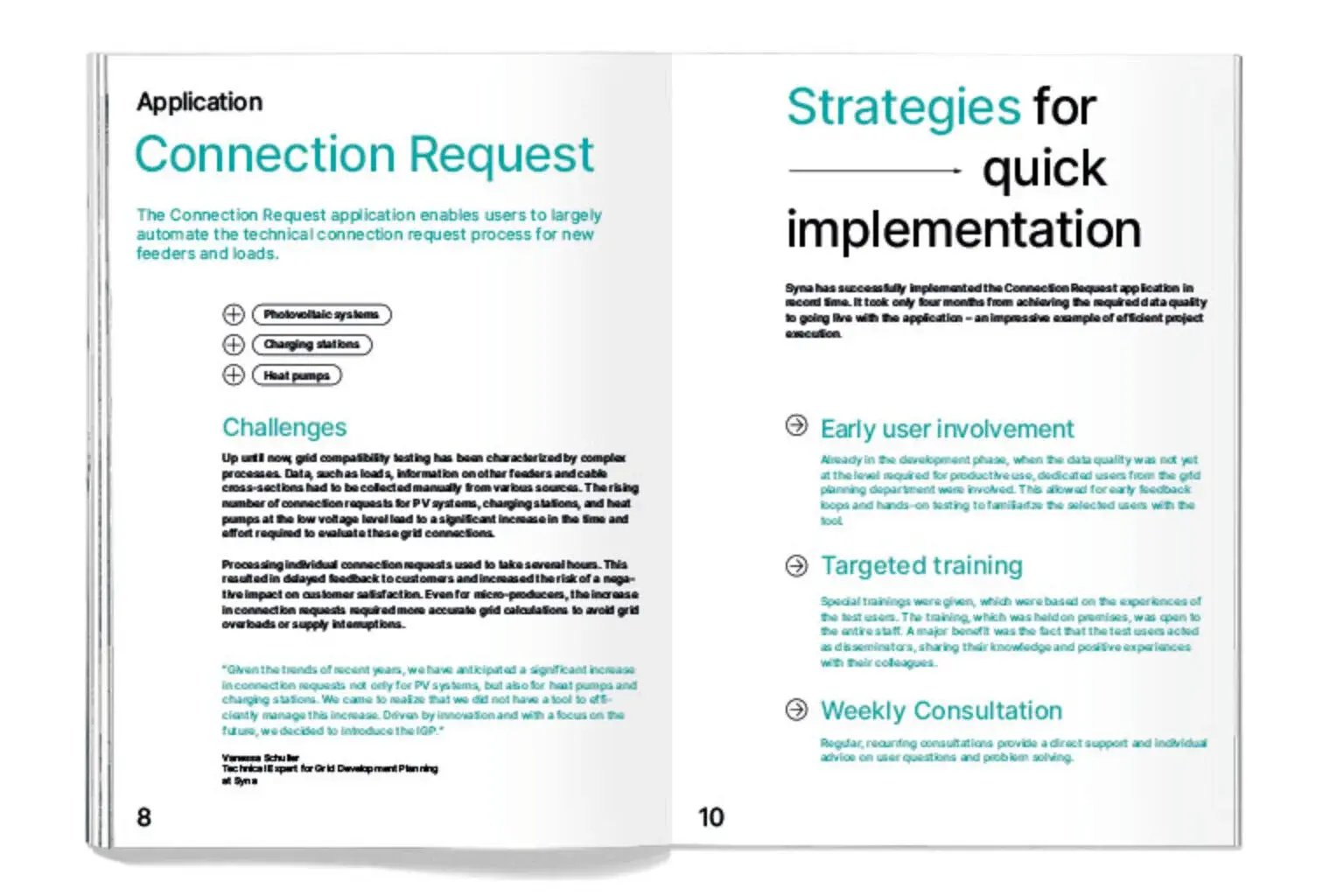
It can support small-scale load and generation assets, including:
- Rooftop solar
- Battery storage
- EV chargers
- Heat pumps
The result is an immediate indication of technical feasibility, with an initial cost estimate where supported by the utility’s process. Customers can then move into the existing application portal when a formal request is appropriate.

Give customers a better starting point and engineers a clearer queue
Online Connection Check helps utilities improve customer service without turning every early question into an engineering task.
- Earlier customer guidance: Give customers practical information before they submit an interconnection request.
- More complete applications: Guide customers into the formal interconnection process with the right project details.
- Reduced manual screening: Automate repeatable address-based feasibility checks for eligible request types.
- Consistent evaluations: Apply utility-defined rules and physics-based calculations to each check.
- A connected process: Link self-service results to your existing application portal and downstream workflow.
Explore how utilities have enabled instant, online interconnection checks
Case study: The Strategies of Readying Helsinki’s Power Grid for 2030 with envelio
Case study: Introducing a POI self-checker for end customers at E.DIS
White Paper: Scaling the Distribution
Interconnection Process
Part of a broader interconnection automation software strategy
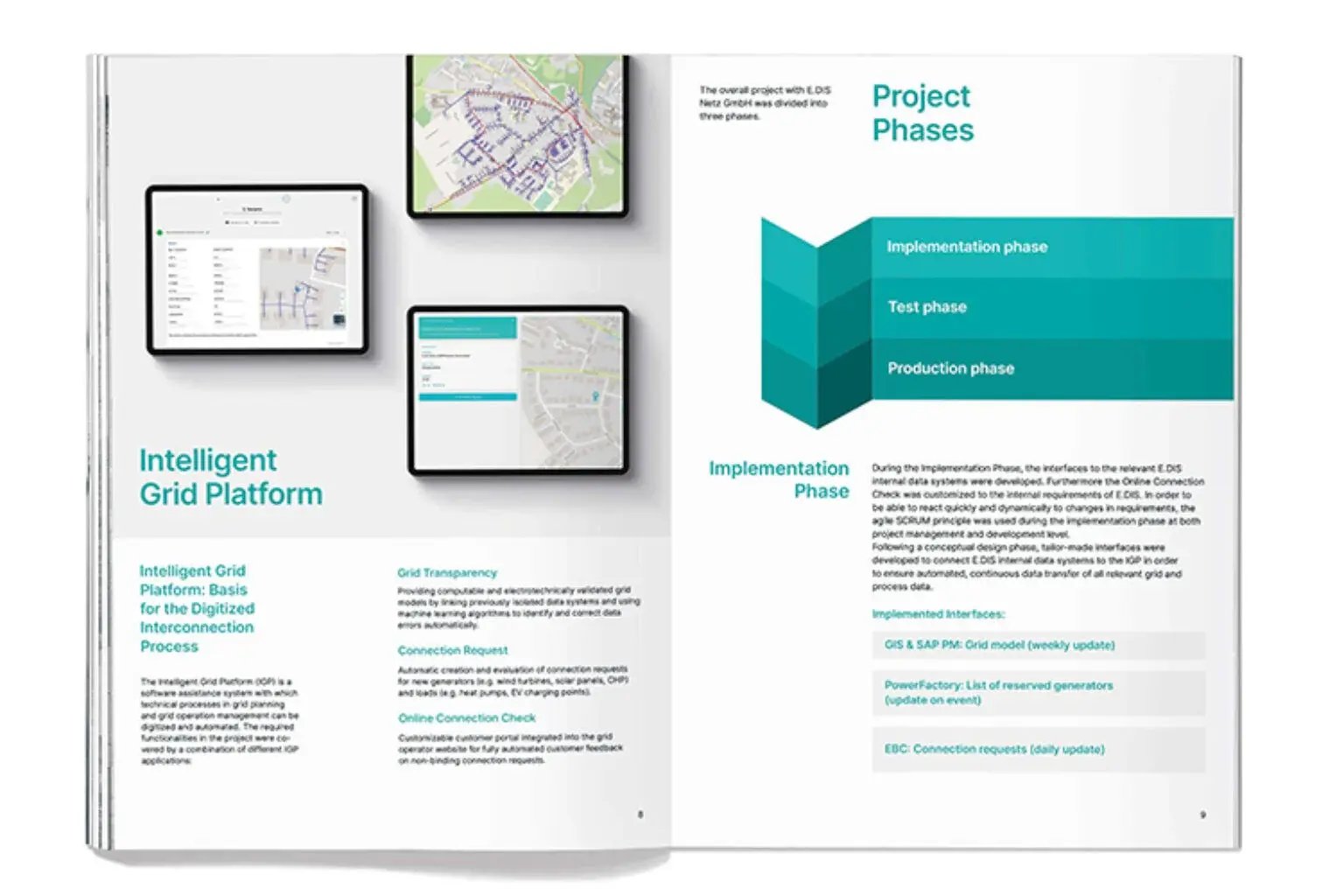
Online Connection Check is one way the Intelligent Grid Platform software supports interconnection for electric utilities. It connects customer self-service with the same grid intelligence used for hosting capacity analysis, interconnection studies, queue management, and planning.
For developers and consultants evaluating multiple sites or larger projects, Grid Connection Navigator provides a map-based view of available hosting capacity and headroom to identify potential points of interconnection.
Give customers earlier answers with utility-defined grid intelligence
Create a clearer customer experience for small-scale grid connections and give your interconnection team more time for the requests that require detailed engineering review.
Common questions we hear about our hosting capacity evaluation tool
An online interconnection check is a self-service grid connection assessment that allows customers to evaluate whether a proposed asset can connect at a specific address before submitting a formal interconnection request.
Yes. Utilities can link Online Connection Check to their existing customer or interconnection application portal so customers can move from an early feasibility check into the appropriate next step.