Compare grid investment options before committing capital

When a constraint is identified, utilities need to determine which response is technically appropriate and economically justified. A proposed upgrade may solve one condition while creating unnecessary cost, overlooking an alternative, or conflicting with a longer-term plan.

The Intelligent Grid Platform (IGP) provides a distribution system planning tool for testing proposed changes against the grid model. Engineers can evaluate reinforcement, network reconfiguration, new grid areas, and other measures using the same physics-based analysis that supports the broader planning process.

Move from a proposed measure to an evaluated option

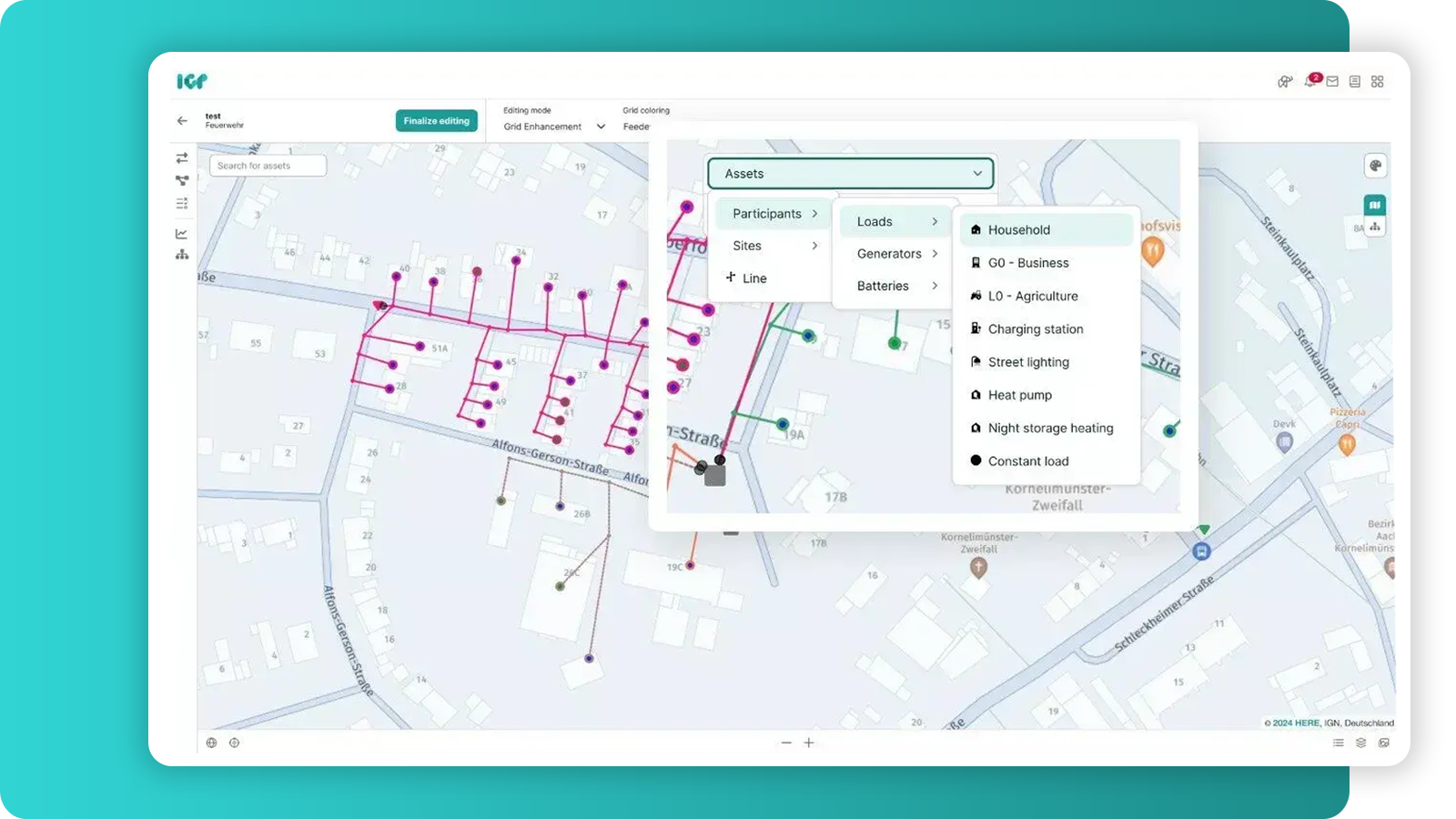
The IGP supports the detailed planning work required to investigate possible measures. Engineers can create planning projects, modify relevant network elements and topology, and assess how the proposed change affects the distribution system.

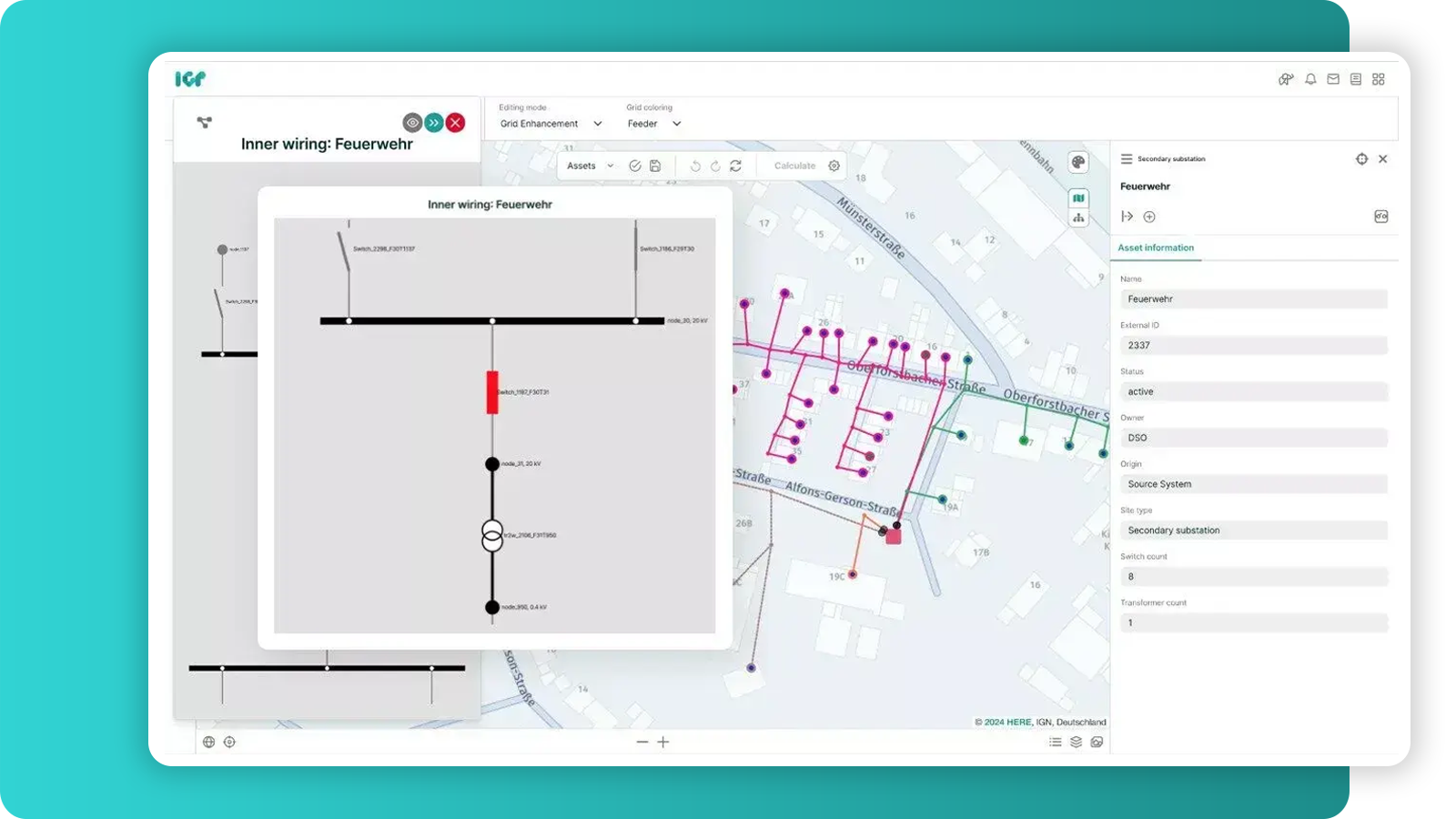
This can include evaluating new lines, substations, transformer changes, feeder modifications, switching states, and new network areas, depending on the planning question.

Evaluate technical impact before you decide

Every planning option should be assessed in the context of the network, not only as an isolated asset change. The IGP uses power-flow and short-circuit analysis to help teams evaluate the effect of proposed measures on loading, voltage, and network performance.

  • Compare technically feasible planning alternatives.
  • Assess network changes across relevant voltage levels.
  • Evaluate representative conditions or time-series conditions where appropriate.
  • Review graphical and statistical results to identify critical conditions.
  • Retain a clear connection between the planning measure and the technical analysis behind it.
Consider alternatives before expanding the grid

Grid reinforcement remains essential in many cases. But utilities may also need to compare reconfiguration, optimized operating conditions, flexibility, and other NWAs before defining the best path forward.

The IGP gives engineers a consistent framework for evaluating these options against the same network model and planning assumptions. This supports more targeted capital allocation and reduces the risk of advancing measures before their technical effect is understood.
 

Keep short-term measures aligned with the long-term plan

Detailed planning decisions should inform the broader network strategy, and strategic plans should guide near-term work. Within the IGP, scenario results and planning measures can be reused across related workflows, helping teams reduce rework and maintain a clearer connection between immediate projects and future system needs.

Explore further

Case Study

Case study: The Strategies of Readying Helsinki’s Power Grid for 2030 with envelio
Common questions we hear about our tool for distribution grid planning

What is a distribution system planning tool?

A distribution system planning tool helps engineers assess how proposed grid changes affect the electrical network. It can support the technical evaluation of upgrades, new network areas, reconfiguration, and other planning measures before the utility commits to a project.

How can utilities compare grid upgrade alternatives?

Engineers can model proposed changes and evaluate their technical effect with power-flow and short-circuit analysis. Comparing the results against the same grid model and planning assumptions creates a more consistent basis for selecting among feasible alternatives.

Can the IGP support planning across voltage levels?

Yes. The IGP can evaluate the effects of relevant network changes across voltage levels, helping engineers consider interactions between primary and secondary distribution systems where the model and planning question require it.

How does detailed planning connect to strategic planning?

Detailed planning studies can use future scenarios and planning assumptions developed for the long-term plan. Their results can also help validate and refine future planning options, creating a more connected planning process.