Across the United States, distribution grids are under unprecedented pressure. The rapid growth of distributed energy resources (DERs) – from residential solar systems to battery storage and electric vehicle (EV) charging infrastructure – is transforming the way electricity is generated and consumed.
However, while customer demand and clean energy adoption accelerate, many utilities still rely on fragmented data, manual studies, and legacy workflows that create backlogs, uncertainty, and frustration for developers and customers alike. Interconnection queues have become a bottleneck for the energy transition.
To address this challenge, the New Jersey Board of Public Utilities (NJBPU) introduced grid modernization rules (PRN 2024-067, N.J.A.C. 14:8-4 and 14:8-5) aimed at overhauling interconnection processes and laying the foundation for a comprehensive grid modernization effort.
This regulatory initiative is an example of a nation-wide push towards grid modernization. As demand grows, many utilities are also exploring a shift away from paper-based, reactive processes toward digital, data-driven systems that enable transparency, automation, and collaboration.
What New Jersey Is Proposing
- A Common Interconnection Agreement Process (CIAP): A shared online portal that standardizes interconnection workflows, communication, and data exchange.
- Hosting Capacity Transparency: Utilities must publish regularly updated hosting capacity maps.
- Pre-Application Verification & Evaluation (PAVE): Developers gain access to grid data before submitting full applications.
- New Review Levels and Timelines: Updated technical definitions (aligned with IEEE 1547-2018) and transparent timeframes for reviews.
- Integration of Storage and Community Solar: Recognition of community solar’s growing importance.
- Cost Recovery: Utilities may recover CIAP development costs via application fees.
Together, these measures aim to reduce uncertainty, eliminate redundant steps, and accelerate viable interconnections while preparing the grid for higher DER penetration.
(Source: New Jersey Register, June 3, 2024 – PRN 2024-067)
Why This Matters for Utilities Nationwide
- Manual engineering review currently needed for low-impact applications, taking away technical resources from complex studies
- Customer disputes and increasing regulatory pressure
- Lack of insight due to data gaps, leading to customer confusion
Fortunately, solutions like the Intelligent Grid Platform can create the foundation for a data-driven planning culture, where interconnection and grid planning workflows are integrated into a cohesive digital ecosystem.
How Digital Platforms Accelerate Grid Modernization
Digital platforms like envelio’s Intelligent Grid Platform (IGP) enable utilities to:
- Create validated, computable grid models reflecting real-world network states
- Automate technical evaluations of interconnection requests
- Provide Online Connection Checks for customers and developers
- Run hosting capacity analyses and visualize constraints
- Integrate GIS, SCADA, and MDM data into one environment
Utilities in Europe – including E.DIS, Elektrilevi, and Syna – have already shown that digital interconnection processes reduce processing times dramatically and improve data quality.
Explore how the IGP supports modern interconnection workflows
The Road Ahead: Preparing for a Digital Interconnection Future
The BPU’s proposal is only the beginning. The Grid Modernization Forum will address non-wire alternatives, DER flexibility services, and future reforms.
Utilities should begin to:
- Assess data quality and system interoperability
- Develop hosting capacity maps
- Automate early-stage screening and technical evaluations
- Build internal capabilities for data-driven decision-making
New Jersey signals a national trend: grid modernization is becoming essential infrastructure for the clean energy transition.
Conclusion
New Jersey’s grid modernization proposal (PRN 2024-067) is a clear signal that modernizing interconnection processes with transparency and automation will become the standard in the future. Utilities that digitize their grid processes now will be best positioned to meet clean energy goals and manage interconnection growth.
The future of interconnection is digital — and it starts with data.
Is your interconnection process ready for New Jersey’s modernization rules?
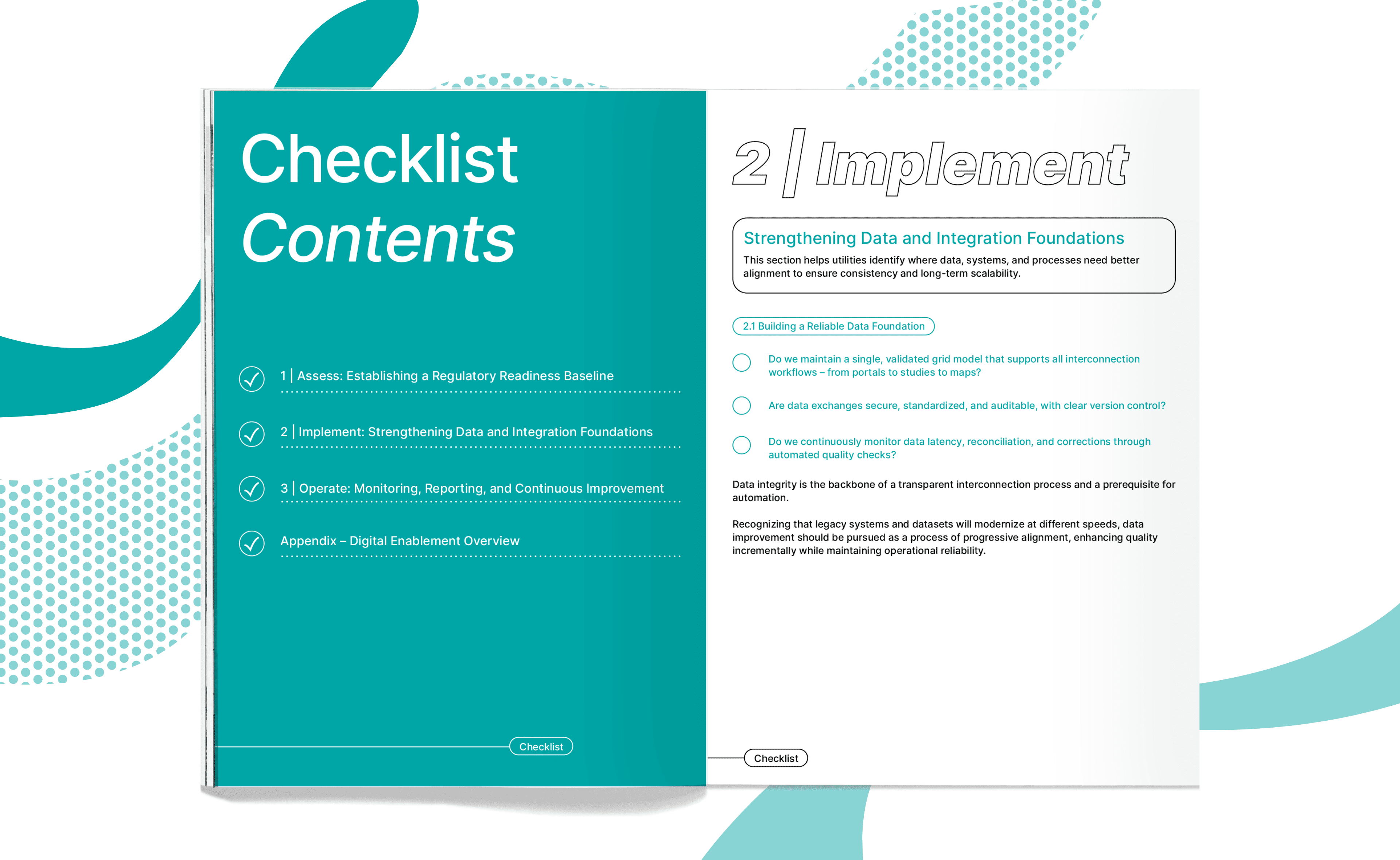
Download the checklist to verify